

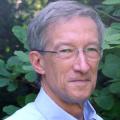

The Department of Slavic Languages and Literatures regrets to report the passing of our colleague John Malmstad on Feb. 14, 2026, at the age of 84.
In a scholarly career that lasted over 50 years, John Malmstad became internationally known for his voluminous and heroic work in preserving the legacy of Russian modernism, a body of literary texts, memoirs, and correspondences that for decades could not be published in the Soviet Union. Probably no non-Russian scholar would come to publish so many books, articles, and editions in Russia and in the Russian language, most of them for prestigious series and journals. Indeed, it could be argued that he was better known to Russian readers than to readers of his native language.
Of his 27 book-length publications, only four appeared in English: his co-authored (with Robert Maguire) translation of Bely’s Petersburg; his prize-winning biography of Mikhail Kuzmin (written with Nikolai Bogomolov); a collection of articles about Bely; and a co-edited Festschrift for Vladimir Markov. Nearly half of his articles were published in foreign languages, primarily Russian. All of these works, regardless of the language in which they appeared, were remarkable for their scholarly importance and rigor.
Born and raised in Bismarck, North Dakota, John grew up loving music, film, and literature, especially poetry. At Northwestern University, he completed many of the premedical requirements but chose to major in Russian and comparative literature. He earned his Ph.D. from Princeton University in 1969, working under the supervision of Nina Berberova, who helped him develop his interests in modern Russian culture and émigré Russian literature.
John Malmstad’s scholarly talents and agenda did not fit the conventional mold of American scholarly activity. During his long career, American literary scholars, including Slavists, tended to neglect biography and the discovery of unpublished materials in favor of developing literary theory, interpreting specific works, characterizing literary movements, and identifying overarching themes. John took little part in American scholarly associations and avoided their large annual gatherings. But he did play a valued and significant role in the two institutions in which he served, Columbia University (1968-1985) and Harvard University (1985-2015).
Although he began his teaching career at the unusually young age of 27 and had no pedagogical training, he was able to adapt quickly to the scholarly and teaching demands of a major research university. Unlike most literary scholars, he willingly taught beginning Russian language courses, taking advantage of this opportunity to perfect his understanding of Russian grammar. For undergraduates, he taught a yearlong survey of Russian literature with readings in English, and for graduate students he conducted seminars with readings in Russian on his beloved poets, among them Blok, Bely, Annensky, Kuzmin, and Khodasevich.
Independent-minded and unafraid to confront senior faculty members, he was outspoken in siding with graduate students in their attempts to exchange some of the program’s requirements in historical linguistics for increased study of post-medieval literature. During these years, John plunged deeply into the vibrant artistic and musical life of New York City. He was especially drawn to the New York City Ballet, which, under George Balanchine’s direction, was lending new vitality to the great traditions of Russian dance. He worked with some of the dancers, wrote articles on ballet, and eventually wrote a scenario for the ballet "Winter Dreams," which was performed by the Pennsylvania Ballet in 1987.
John came to Harvard in 1985 and soon came to play an active part in the intellectual, social, and administrative life of the university. It was a moment of generational and curricular transition for the Slavic Department, and he was appointed its chair in 1989, serving for six years. Distinguished senior professors — Vsevolod Setchkarev, Kiril Taranovski, Albert Lord, and Omeljan Pritsak — were retiring, and John worked with his remaining colleagues to appoint new faculty members who would represent a variety of critical and theoretical approaches to Russian literature and culture, ones he himself did not share: cultural semiotics, literary sociology, narrative theory, gender studies, reception history, and deconstruction.
He established a departmental colloquium on literature and chaired the literary seminar at the Russian Research Center, as the Davis Center used to be known. John’s high standards, broad learning, and good judgment led, finally, to his appointment as the associate dean responsible for coordinating senior appointments in the humanities.
John was deeply committed to the ideal of a liberal education, especially to the Core and Freshman Seminar programs designed for undergraduate nonspecialists. For years, he served on the committees that selected appropriate offerings. As an indefatigable research scholar, he was committed to helping build library collections and served on several library committees. He was an active member of the Russian Research Center, which sponsored the study of Russia and the Soviet Union from a variety of disciplinary perspectives. Under his influence, the center invited leading scholars from the former Soviet Union to conduct research and give lectures at Harvard. Some of them collaborated with him on scholarly publications.
As important as these administrative services were, and as seriously as he fulfilled them, his most memorable contributions to Harvard came in the classroom. He built upon his Columbia courses by broadening their scope, incorporating his lifelong love of all art forms. His most famous and influential course was undoubtedly his ambitious Core course on the Russian avant-garde, which would regularly attract over 150 students. It featured rigorously prepared and elegantly delivered presentations on literature, art, music, musical theater, architecture, and film. He similarly expanded his graduate seminars, such as the one on Russian symbolism, to include work on these other forms. He put years of preparation into these courses, and this preparation spilled over into his many articles that related literature and other arts, especially painting and ballet.
As a teacher, John was welcoming to new students of Russian culture and demanding of advanced ones, requiring that they be as meticulous in their research as he was in his. Not many could live up to this high standard, but, for those who could, he became a lifelong mentor as they assumed leading positions in American academic life. In the days since he passed away, many of them have written to us with warm memories of his teaching and support.
During his last years on the faculty, John gradually came to do less teaching and less administrative work at Harvard, as he worked tirelessly to complete large scholarly projects on Bely, Kuzmin, and Russian modernism. Accordingly, he arranged his schedule to spend as much time as possible in France and Russia. But the younger scholars he had taught and appointed to the faculty were ready to continue his legacy of service. We remember fondly his friendship and collegiality, the many social and family gatherings he shared with us, and the many cultural events we attended with him.

Research Professor, Harry Tuchman Levin Professor of Literature, Emeritus, Harvard University
