Past Events

Event Format
to
In person

Join us for a conversation with Kazakhstan's Ambassador to the U.S., Yerzhan Ashikbayev to discuss the challenges and opportunities facing his country, as well as the future of the Kazakh-U.S. strategic partnership.

Ambassador of Kazakhstan to the USA, Embassy of the Republic of Kazakhstan

Senior Fellow and Director, Program on Central Asia, Davis Center

to
Online

Learn about the future of democracy in Georgia.

Associate Professor in Sociology of Religions, Lund University

Chairman, Advisory Board, Program on Georgian Studies, Davis Center; Professor of Modern Georgian History, Ilia State University (Tbilisi, Georgia)

Former Diplomat; Senior Research Fellow, Russia and Eurasia Program, Chatham House

to
Online

This talk examines musical life in the Warsaw Ghetto, using song texts, diaries, and even concert reviews in ghetto newspapers to reconstruct its musical environment.

Recording Available

Harry Starr Fellow in Judaica, Harvard University

Professor of Russian, English, and Jewish Studies, Boston College; Chair, Seminar on Russian and Eurasian Jewry, Davis Center

to
In person

For Putin to order military force abroad, a confluence of certain factors is necessary, argues Dr. Simon Saradzhyan. He will discuss his findings and their practical implications — for example, can they be used to forecast Russian military interventions?

Founding Director, Russia Matters, Belfer Center for Science and International Affairs, Harvard Kennedy School

to
In person

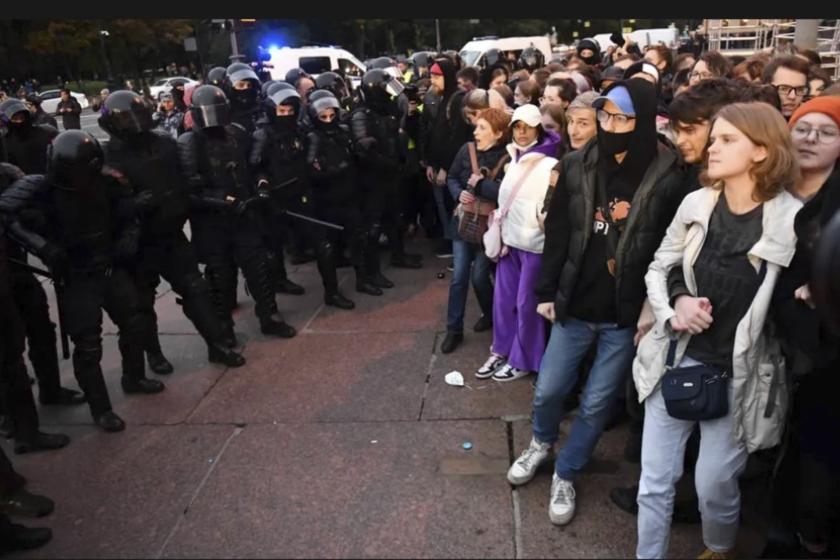
On April 14, 2021, the Moscow offices of the student-run journal DOXA were raided by the police. Anastasiya Osipova argues that during their year on trial, the DOXA editors attempted to counterpose both the institutional logic of police aesthetic (becoming the protagonists of a police file) and the celebrity logic (becoming media stars) with the aesthetic of a network––de-emphasizing the historical uniqueness of their roles as political prisoners to amplify the connection not only to their audience but also to the political militants of the past: creating a counter-network and a pedagogical counter-institution. 

Ernest E. Monrad Professor of Slavic Languages and Literatures, Harvard University