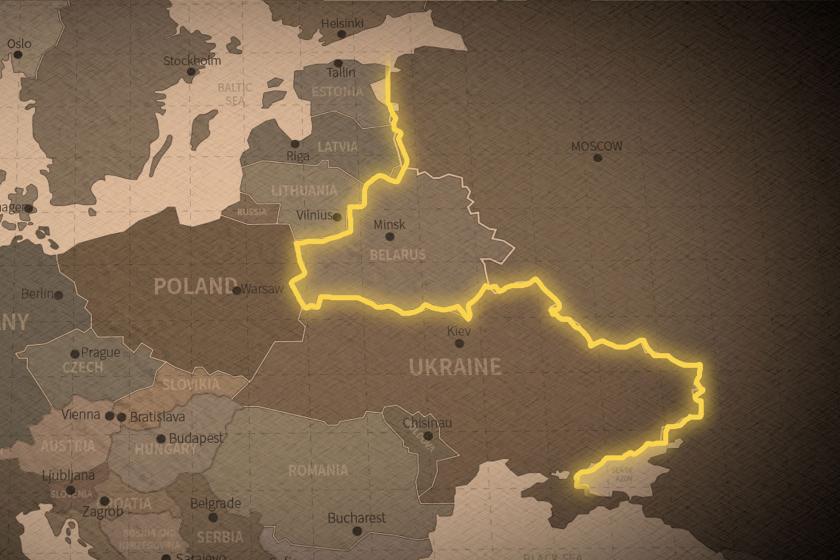
The Master of Arts in Regional Studies—Russia, Eastern Europe, and Central Asia (REECA) is a two-year program that offers advanced training in the history, politics, culture, society, and languages of this region.
We are the only dedicated Georgia program at a U.S. university, advancing the study of Georgia, the South Caucasus, and the Black Sea region through research, teaching, scholarly and cultural exchanges, and outreach.
Join the talk examining the (im)possibilities of reconstructing contemporary Irano-Armenian diasporic histories through the lens of doubly minoritized women’s activism and elusive archives.
Professor of History, Meghrouni Family Presidential Chair in Armenian Studies, and Director of the Center for Armenian Studies, University of California, Irvine
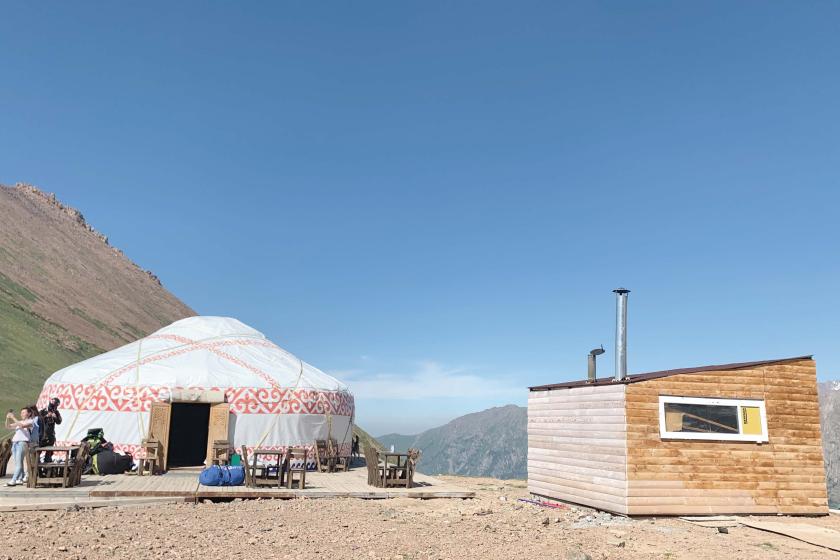
A study of Kazakhstan’s telecom sector shows how China's seemingly unified strategy of building an alternative to U.S.-dominated internet infrastructure is appropriated by local actors and shaped by local forces.
Join us for a timely conversation with political scientists Adam N. Stulberg and Mikhail Troitskiy, who challenge conventional nuclear deterrence theory. Drawing on three recent high-stakes episodes from 2022 to 2024, they introduce a new distinction between risk-taking and opportunistic coercive strategies to show how mismatched approaches have at times defused tensions and averted nuclear confrontation.
Join us for a talk exploring Vladimir Nabokov as a bilingual writer whose work is deeply rooted in the Russian literary tradition. This talk examines how his shift from Russian to English transformed this tradition.
This webinar offers practical, inclusive strategies to help all students access and comprehend complex social studies texts through vocabulary support, text structure instruction, graphic organizers, and multisensory techniques.
Drawing on two years of ethnographic research on the crossings of the Gali people, this presentation examines how people develop anticipatory tactics, spatial knowledge, and creative resourcefulness to generate manageable lives in a zone where livelihoods are dependent on a shifting, militarized boundary line.
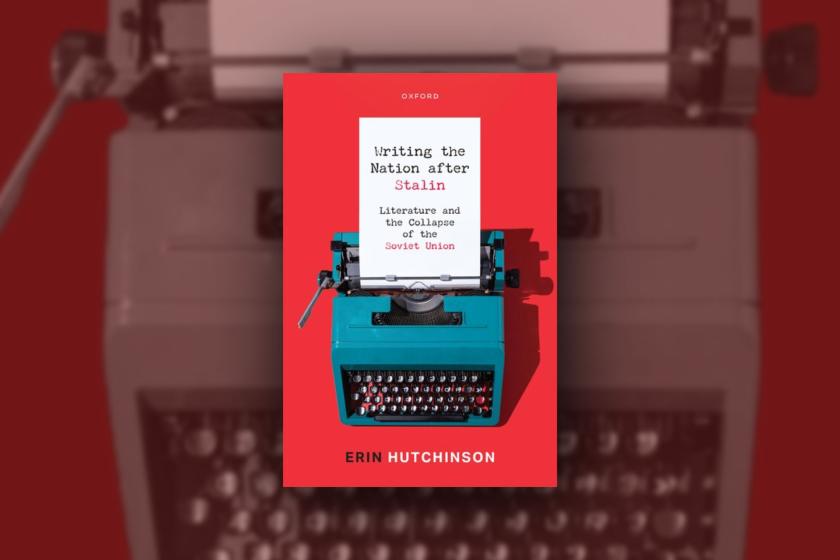
The talk shows how late Soviet claims of cultural equality masked a Russocentric canon-making regime and how Georgian writers and critics both enabled and resisted it through competing strategies of universality and national self-assertion.
Join us to hear Joseph Torigian tell the life story of Xi Zhongxun, a man who spent his entire life struggling to balance his own feelings with the Party's demands.
This webinar offers history and social studies teachers practical, classroom-ready ways to work with Cold War primary sources in a short professional learning session.
This webinar explores scaffolding techniques and strategies from The Writing Revolution to help educators make social studies writing tasks more accessible and manageable for diverse learners.
Professor of Political Science and International Affairs, George Washington University; Director, Institute for European, Russian, and Eurasian Studies (IERES), Elliott School
Professor of Political Science, Director of the Moynihan Institute of Global Affairs at the Maxwell School of Citizenship and Public Affairs, Syracuse University
A reassessment of the literary legacy of Julius Margolin, whose memoir "Journey into the Land of the Zeks" was of the earliest important contributions to the corpus of Gulag literature.
Join us for a seminar on Spain’s 1986 referendum on NATO membership. Drawing on multinational archival research and interviews, the talk explores how Spain navigated allies' expectations and domestic political pressures while defining its role in NATO.
The book asks questions about how the great ideologies of the twentieth century such as nationalism, socialism and liberalism both clashed and fused in Georgia to establish something no one was expecting, a social democratic state on the periphery of Europe.
Come hear a Pulitzer-winning historian and journalist discuss autocracy and Russia's ongoing aggression against Ukraine at our speaker series"The Forum: Europe in a Time of War," a collaboration by the Davis Center, Harvard's Ukrainian Research Institute, and the university's Minda de Gunzburg Center for European Studies.
Senior Fellow of International Affairs and Agora Fellow in Residence, Johns Hopkins School of Advanced International Studies; Co-Founder, Democracy Lab (Foreign Policy/Legatum Institute); Adjunct Fellow, Center for European Policy Analysis; Staff Writer, Atlantic
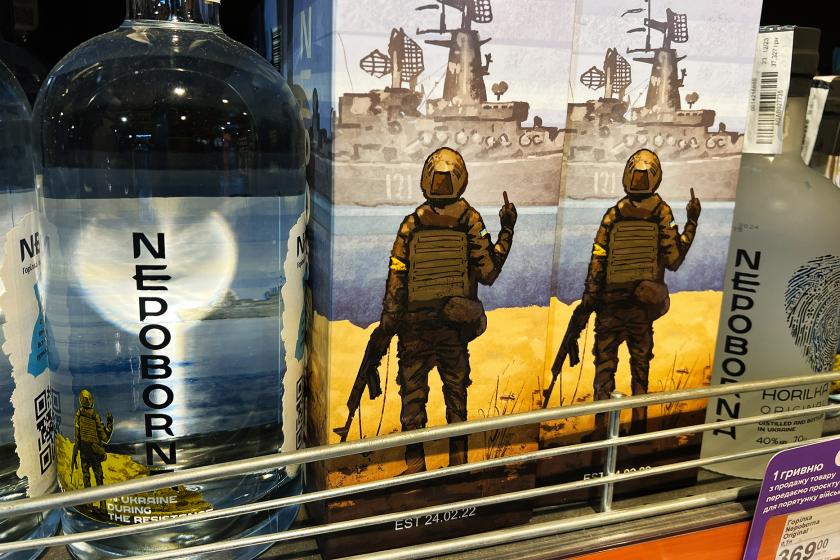
Discover how art becomes a powerful tool of memory, identity, and resistance in times of conflict in this compelling session of The Arts of Eastern Europe and Eurasia webinar series.
International Education Program Coordinator, The Center for Slavic, Eurasian and East European Studies, The University of North Carolina at Chapel Hill
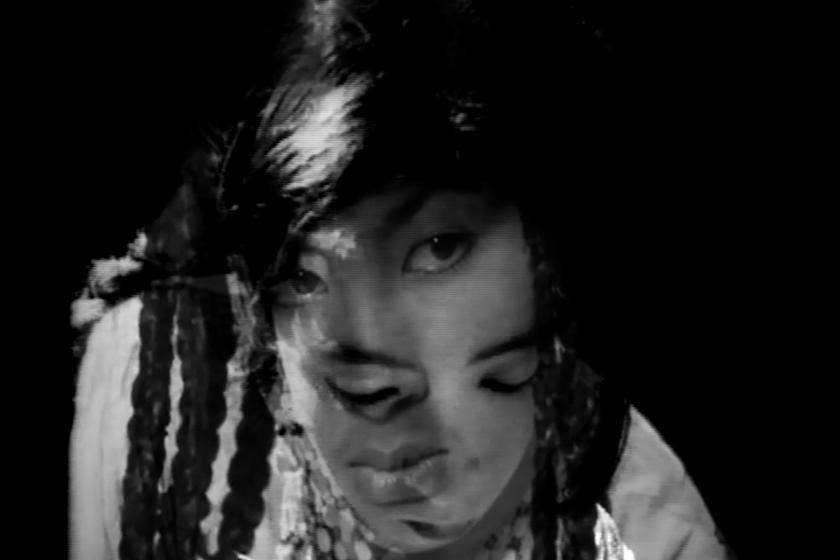
Join us to explore the Soviet celebration of Persian epic poet Ferdowsi, a landmark cultural event that reshaped literary politics from Moscow to Central Asia.
Join us for a screening of The Activist, a gripping Lithuanian film noir–drama that follows a young man who infiltrates a radical neo-Nazi group in a desperate search for the killer of his LGBT+ activist boyfriend. The screening will be followed by a conversation with director and producer RomasZabarauskas, offering behind-the-scenes insight into the film’s urgent themes and creation.
This talk discusses the 1920s and 1930s as a critical juncture in the Russian reception of Laurence Sterne, the author of Tristram Shandy and A Sentimental Journey.