Program on Central Asia

The Program on Central Asia promotes research and teaching at Harvard on the history and current affairs of five Central Asian countries — Kazakhstan, Kyrgyzstan, Tajikistan, Turkmenistan, and Uzbekistan.

We support the study of the Central Asian region using tools and insights from various fields of social sciences and humanities. Our activities include research projects, seminar series, curriculum development and course offerings, creation of digital resources for the study of the region, facilitation of research by students and visiting scholars, and cultural events. 

While the program aims at generating and disseminating knowledge and resources on Central Asia spanning different periods of its history, our main focus is on the independence period and current developments. We approach Central Asia as a region that opened up as a result of the dissolution of the USSR. The states, economies, and people of Central Asia are now an integral part of the globalized world, and developments in the region cannot be properly understood without tracing and analyzing different forms of connectivity, influence, and interdependence.

Initiatives and Projects

Related Insights

After 30 years of remarkable stability in bilateral ties, Russia has become the biggest and most important unknown variable in Kazakhstan’s foreseeable future, writes Nargis Kassenova, director of our Program on Central Asia.

If you're attending this year's conference, come hear our scholars speak on Ukrainian refugees and Belarusian partisans, Russian imperial history, authoritarian rule in Georgia and Central Asia, and much more.

A major conference, co-organized by the Davis Center, considers how to rethink and revise historical narratives for a region that has traditionally been viewed as a realm of inter-imperial competition.

Related Events

Upcoming Event

Join us to learn how the Nauryz celebration (traditional Kazakh New Year) has changed over time, how it reflects broader changes in Kazakh society—from colonial rule to socialist modernization—and how traditions are reshaped to fit new political and cultural realities.

Past Event

In their new book Backlash: China's Struggle for Influence in Central Asia, Edward Lemon and Bradley Jardine show that China’s power projection is far from a one-way street—it is negotiated, resisted, and reshaped by local actors across Central Asia.

Past Event

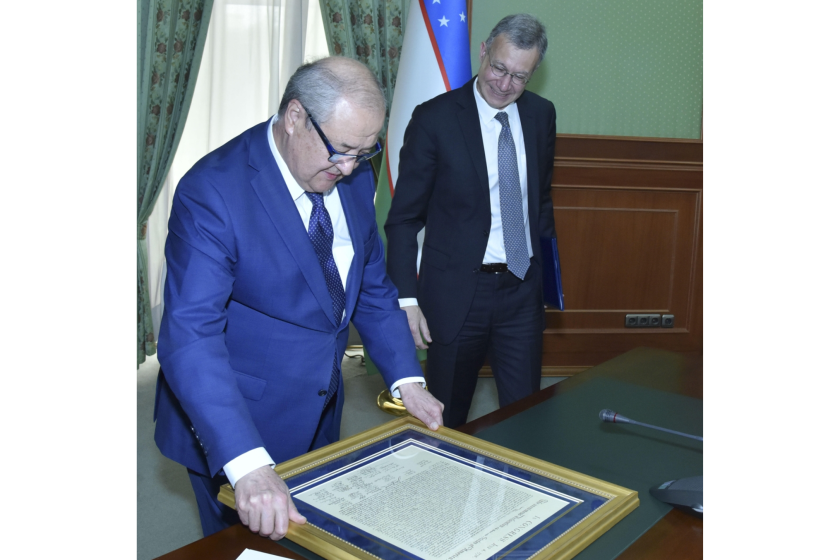
Join former U.S. Ambassador George Krol as he explores the past, present, and future of U.S. relations with the post-Soviet states of Central Asia.