The Master of Arts in Regional Studies—Russia, Eastern Europe, and Central Asia (REECA) is a two-year program that offers advanced training in the history, politics, culture, society, and languages of this region.

We are the only dedicated Georgia program at a U.S. university, advancing the study of Georgia, the South Caucasus, and the Black Sea region through research, teaching, scholarly and cultural exchanges, and outreach.
Join us as we discuss the history of U.S.-Central Asia cooperation in non-proliferation, assess the current state, and explore the prospects and obstacles ahead in the nuclear energy sector.
We invite you to join us in celebrating and supporting undergraduate research on Russian and Eurasian studies. The Davis Center has hosted this colloquium since 1996, showcasing work by students from Harvard, Wellesley, and Wheaton.
This webinar explores scaffolding techniques and strategies from "The Writing Revolution" to help educators make social studies writing tasks more accessible and manageable for diverse learners.
This panel brings together scholars and practitioners to examine Georgia’s trajectory, including the use of lawmaking and other formal legal mechanisms to consolidate power and undermine democratic accountability.
Director, Davis Center; Laurence A. Tisch Professor of Government; Senior Scholar, Harvard Academy for International and Area Studies
Harvard University
Semyon Khanin, one of Latvia’s most prominent Russian-language poets will appear together with Kevin M. F. Platt, who is among his longstanding translators into English. This bilingual reading will be followed by a Q&A and discussion with the poet and translator.
This webinar is a conversation with young Georgian scholars and activists, who have themselves experienced and resisted the entrenchment of authoritarian rule in Georgia. Focusing on the future, it aims to paint a picture of the constraints and opportunities that they face today, and to articulate a vision for a better tomorrow.
Professor of Political Science and International Affairs, George Washington University; Director, Institute for European, Russian, and Eurasian Studies (IERES), Elliott School
Professor of Political Science, Director of the Moynihan Institute of Global Affairs at the Maxwell School of Citizenship and Public Affairs, Syracuse University
A reassessment of the literary legacy of Julius Margolin, whose memoir "Journey into the Land of the Zeks" was of the earliest important contributions to the corpus of Gulag literature.
Come hear key findings from a unique comparison of institutional reforms enacted or proposed by elites, opposition groups, and other actors in Armenia, Kyrgyzstan; and Russia.
Come hear more than 20 outstanding young scholars present on topics as diverse as energy, child care, migration, managed successions, and much, much more
Join us for the annual Davis Memorial Lecture, exploring how Indigenous representation operates under conditions of political constraint, with a focus on the growing repression faced by Indigenous activists in Russia.
Join us for a seminar on Spain’s 1986 referendum on NATO membership. Drawing on multinational archival research and interviews, the talk explores how Spain navigated allies' expectations and domestic political pressures while defining its role in NATO.
The book asks questions about how the great ideologies of the twentieth century such as nationalism, socialism and liberalism both clashed and fused in Georgia to establish something no one was expecting, a social democratic state on the periphery of Europe.
This webinar offers history and social studies teachers practical, classroom-ready ways to work with Cold War primary sources in a short professional learning session.
Join us to hear Joseph Torigian tell the life story of Xi Zhongxun, a man who spent his entire life struggling to balance his own feelings with the Party's demands.
Join us for the talk examining Soviet historical novels about Genghis Khan by Vasily Yan and Aleksei Kalashnikov as a site of ideological struggle over the meaning of the Mongol conquest and its place in Central Asian history.
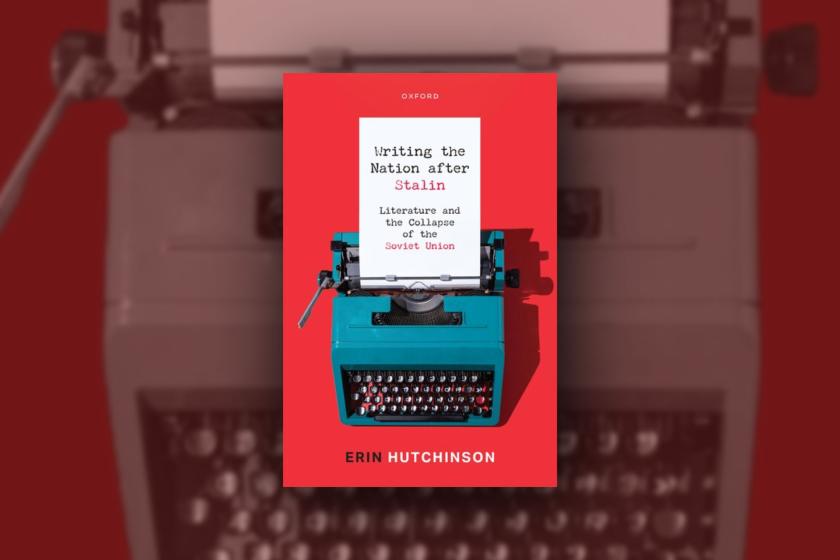
The talk shows how late Soviet claims of cultural equality masked a Russocentric canon-making regime and how Georgian writers and critics both enabled and resisted it through competing strategies of universality and national self-assertion.